Every governed tool, behind one door.
One launcher for the whole platform. Every governed tool one click away, all running on the same cited knowledge and the same role-based governance.
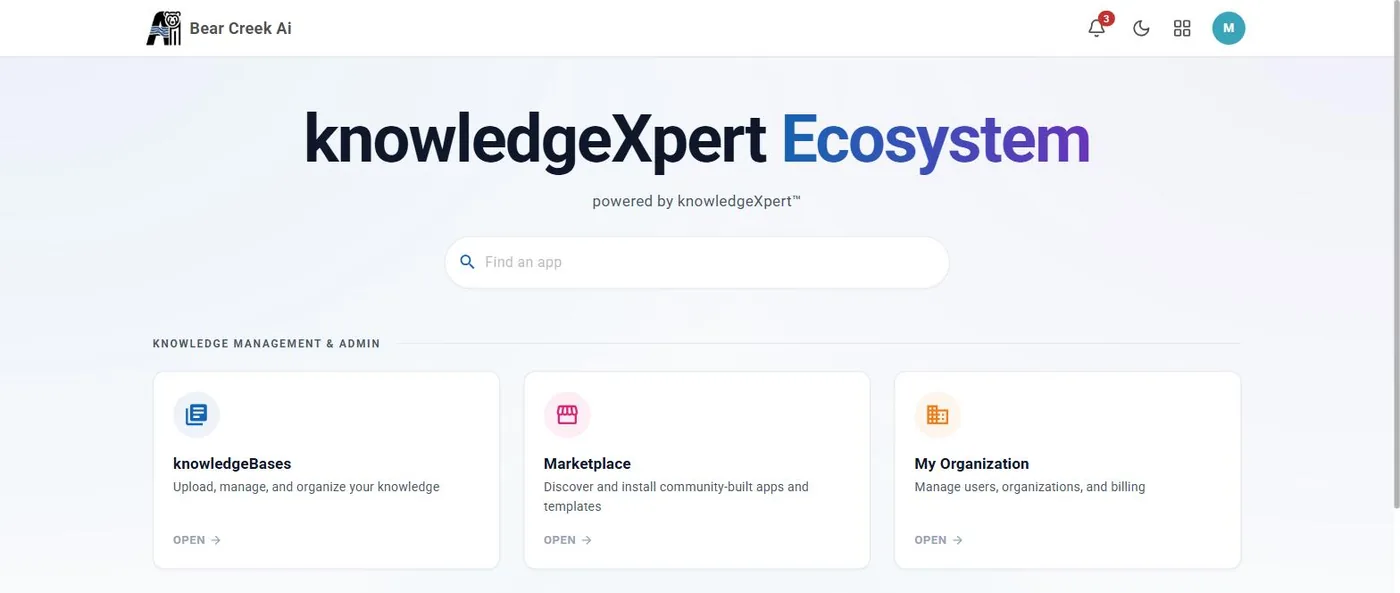 The Hub
Nobody set out to run four tools.
This is what the second year of buying point solutions looks like, and it is a governance problem before it is an annoyance.
Four tools, four logins, four permission models.
Each one was bought to solve a real problem and each one keeps its own idea of who may see what. Nobody can answer the question an auditor actually asks, which is where a given document can end up.
The pilot went well. The rollout is where it stopped.
Twelve people used it because someone walked them through it. The next eighty were sent a link, could not remember which of the tabs it was, and went back to asking the person who knows.
Half the team is not sure what they are allowed to use.
When access is set up per tool, people find out what they can reach by trying it and being refused. So they stop trying, and the capability you paid for goes unused rather than misused.
Everything in one place.
No tool-sprawl: the whole governed platform behind a single launcher your team already knows.
Every tool, one click away
Move from a cited chat answer to an Agentic App to a knowledgeBase without leaving the Hub or switching tools.
Governed across the board
Role-based access and approved-source scoping apply everywhere, the right team reaches the right knowledge, and no one else.
Governance detail →One cited knowledge layer
Every tool runs on the same governed sources and the same citations, so answers are consistent wherever you ask.
How citation works →The tools it launches.
Six tiles, one set of sources underneath them. A person sees the ones their role grants and does not see the rest.
A single door is a governance decision, not a convenience.
Tool sprawl is not mainly irritating. It is the reason nobody can answer where a document is allowed to end up.
One address, not a bookmark folder
People adopt a place they go, not a platform. The Hub is that place, and what appears in it is what their role grants, so nobody has to work out which tool a question belongs to before asking it.
Access decided once, audited once
The same role decides which knowledgeBases someone reaches whether they arrive through Chat, an Agentic App or a tutor. One place to change it and one place to show an auditor.
The fifth capability is not a fifth deployment
Turning something on adds a tile. No procurement round, no new login, no retraining on a different interface, which is the difference between a platform that grows and four tools that accumulate.
Which is also why almost everyone starts small. The usual order is knowledgeBases and Chat, because the sources have to exist before anything can answer from them, then Agentic Apps once people trust the citations. The roles, SSO and audit side of all of it lives on Enterprise.
Straight answers.
Is the Hub something we buy separately?
No. The Hub is how you reach the platform, not another product on the invoice. Every tool your plan includes appears in it.
Do we have to set permissions up in each tool separately?
No, and that is most of the point. Access is role-based and set once: the same governance decides which knowledgeBases a person reaches whether they arrive through Chat, an Agentic App or a tutor. There is one place to change it and one place to audit it.
Can we start with one tool and add the rest later?
Yes, and most teams do. Almost everyone starts with knowledgeBases and Chat, because the sources have to exist before anything else has something to answer from. Agentic Apps and tutorXpert land better once people trust the citations.
Does everyone see the same tools in the Hub?
People see what their role grants them. A field crew and a compliance team can share a launcher and still reach different knowledgeBases and different apps, without either group seeing what the other has.
See the whole platform in one Hub.
Thirty minutes, your own documents, every answer cited to its source.